PhD Supervisors

Technical University of Denmark

Computational Protein Engineering group at DTU Biosustain 

We use state-of-the-art computational and experimental approaches to understand, engineer and design proteins & enzymes for applications in sustainability including valorization of C1 compounds such as carbon dioxide, formate, methane and methanol as well as the biosynthesis of natural products, chemicals, materials and enzymes using microbial cell factories in yeast, bacteria and cell-free biocatalysis. We are addressing multi-objective optimization of multiple protein properties and non-linear epistatic interactions as well as developing novel methods along the DBTL cycle. We are an international and interdisciplinary research team combining high-throughput data science, bioinformatics, machine learning, molecular modelling, theoretical chemistry, process and enzyme engineering, enzymology, molecular and synthetic biology.
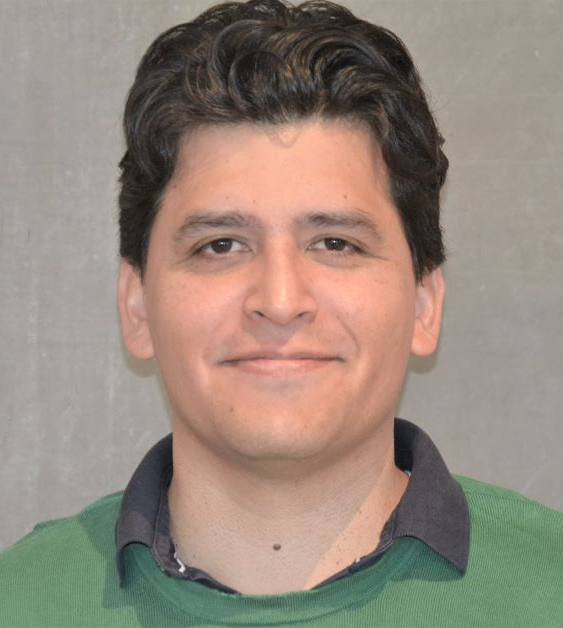
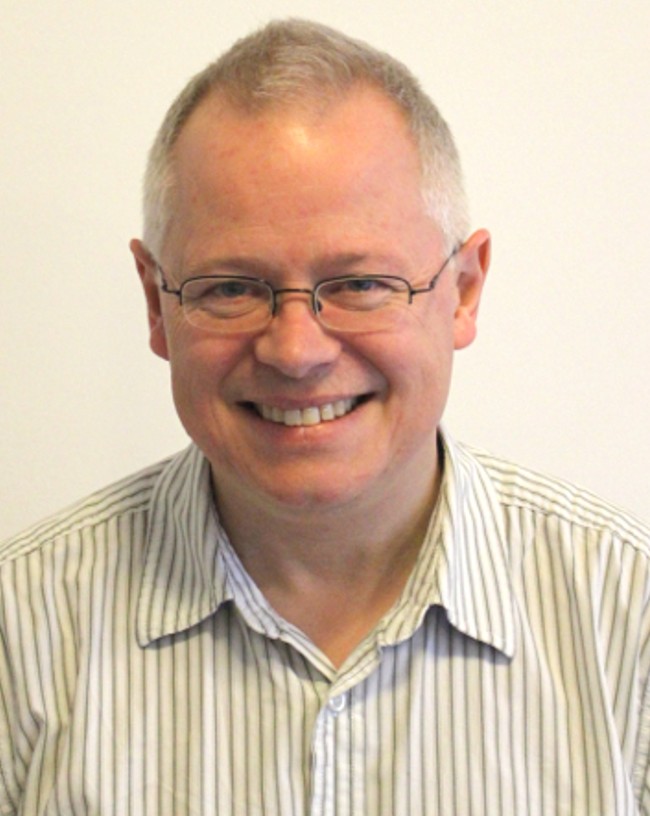
Carlos G. Acevedo-Rocha Google Scholar

Research Group Website

DTU Biosustain

Technical University of Denmark

The bioprocess science lab is focused on scale-down approaches for biocatalysis, examining the effect of reactor operating conditions (e.g. high substrate and product concentrations, multi-phase mixtures) on reaction thermodynamics, enzyme kinetics and stability. The lab uses a variety of novel lab-based measurement techniques. Experimental data are used to build mathematical models to allow prediction for better scale-up. The current focus is on oxidation reactions using various types of monooxygenases, as well as oxidases.

John Woodley Google Scholar

DTU Chemical and Biochemical Engineering

John-Woodley

University of Torino

Our laboratory focuses on protein engineering as well as structural and functional studies to investigate and manipulate biological systems at the molecular level. We study enzymes involved in drug metabolism, bioremediation, bioenergetics, biocatalysis, with particular emphasis on understanding protein structure–function relationships. Our research combines biochemical, biophysical, and computational approaches to explore enzyme mechanisms and optimize their performance for biotechnological applications and integrates a variety of techniques, including recombinant DNA technology, protein expression and purification, enzymatic assays, X-ray crystallography, spectroscopy, mass spectrometry, electrochemistry, calorimetry and computational modeling. Through the integration of these strategies, our group aims to advance the understanding of protein function and to develop innovative and sustainable biocatalysts, biosensors, and bioconversion processes with applications in the health, environmental and energy sectors.

Research Group Website

Giovanna Di Nardo

University of Torino

Our laboratory focuses on protein engineering as well as structural and functional studies to investigate and manipulate biological systems at the molecular level. We study enzymes involved in drug metabolism, bioremediation, bioenergetics, biocatalysis, with particular emphasis on understanding protein structure–function relationships. Our research combines biochemical, biophysical, and computational approaches to explore enzyme mechanisms and optimize their performance for biotechnological applications and integrates a variety of techniques, including recombinant DNA technology, protein expression and purification, enzymatic assays, X-ray crystallography, spectroscopy, mass spectrometry, electrochemistry, calorimetry and computational modeling. Through the integration of these strategies, our group aims to advance the understanding of protein function and to develop innovative and sustainable biocatalysts, biosensors, and bioconversion processes with applications in the health, environmental and energy sectors.
Gianfranco-Gilardi

Spanish National Research Council (CSIC)

The CSIC team dedicates its research efforts primarily to enzyme engineering through directed molecular evolution and hybrid/semi-rational design, spanning a broad spectrum of biotechnological applications. Their focus encompasses the development of innovative screening tools and genetic methods for constructing and exploring enzyme libraries. Additionally, they delve into synthetic biology investigations, particularly in the realms of environmental, energy, and industrial applications. With a wealth of experience in the field of enzyme engineering by laboratory evolution, Prof. Alcalde group have amassed over 20 years of expertise in this domain.

Research Group Website

Miguel-Alcalde

Austrian Centre of Industrial Biotechnology

The overarching objective of this research is to establish multistep catalytic cascades in living organisms by combining enzymes with organo- and metal catalysts for functional-group transformations. Guided by retrosynthetic logic, we investigate diverse chemo- and biocatalysts to design de novo synthetic pathways that merge complementary reactivity, selectivity, and productivity, thereby enabling novel routes to bulk and fine chemicals. These artificial pathways are constructed in vitro or in engineered host organisms using catalysts selected for their functional-group specificity, substrate promiscuity, and high chemo-, regio-, and enantioselectivity to minimise host interference and optimise metabolic flux. Recently, this portfolio was expanded to photo(bio)catalysis by exploring flavin activation mechanisms and shifting from E. coli to phototrophic bacteria capable of performing whole-cell biocatalysis using only light, CO₂, and inorganic salts.

Rudroff Lab

Austrian Centre of Industrial Biotechnology

Our research focuses on carbohydrate-active enzymes, encompassing enzyme discovery, mechanistic studies, and practical applications. We are particularly interested in biochemical engineering approaches that enable the efficient implementation of enzymatic carbohydrate transformations in industrial processes. A key research goal is the development of innovative strategies for process intensification, with a special emphasis on multistep cascade reactions and multiphase transformations involving co-substrates such as O₂.

Bernd-Nidetzky

University of Girona

Sílvia Osuna is an ICREA research professor and part time full professor at UdG. Her research studies biochemical processes mainly related to enzyme catalysis at the interface between computational chemistry and biology. Her lab is developing new computational tools for predicting which amino acid changes are required to the enzyme structure to allow novel function, enhance a promiscuous side reaction, or expand its substrate scope. Her group’s goal is to enable the routine computational design of proficient enzymes to boost their use in industry for the synthesis of pharmaceutically relevant targets. The group is funded by the European Research Council – Consolidator Grant (ERC-2022-CoG-101088032) and 2 ERC- Proof of Concept.

OSUNAlab

Institute of Computational Chemistry and Catalysis

Catalan Institution for Research and Advanced Studies

Silvia-Osuna

Delft University of Technology

The topics in the Klijn lab range from microbial fermentation to ATMP production, where synergy is found in the application of in-line analytics (e.g., Raman spectroscopy, ATR-FTIR, off-gas analysis), development of methods and technology to speed up data-driven modelling, and work towards data-driven control strategies in bioprocessing.

Research Group Website

Cecilia-Clementi

University of Zagreb

Our research exploits the possibilities of reaction engineering and chemical engineering as tools in development of enzymes and new reactions whose products are of interest for the industry. One of the main areas of interests are kinetic characterization of enzymes, evaluation of enzyme stability in the process, and application of this knowledge in reaction development and prediction via modeling. This is followed by reaction optimization by optimization of the reaction conditions, and choosing the best reactor set up for the selected biotransformation.

Faculty of Chemical Engineering and Technology

Aarhus University

The research of our Biocatalysis and Bioprocessing group is aimed at environmentally benign and highly productive biotransformations by combining biotechnology and biomaterials with chemistry and reaction engineering within a multidisciplinary platform. Our research focus is the optimisation of enzymatic conversions by substrate-, biocatalyst-, medium-, and process engineering. Therefore, alternative reaction routes, especially meant for substrate engineering, are explored to reduce the environmental impact compared to established biotransformations. What medium engineering concerns —e.g., the use of two-liquid-phase systems, neat organic solvents, solvent-free systems, and deep eutectic solvents (DESs) —are among our targets to enhance the productivity of biocatalytic reactions?

Department of Biological and Chemical Engineering Website

Lab Website


Cecilia-Clementi

Masaryk University

Stanislav Mazurenko’s Artificial Intelligence Team at Loschmidt Laboratories, RECETOX, Masaryk University, combines cutting-edge machine learning with protein science to unlock the secrets of protein function and design. We apply diverse data-driven approaches to analyze protein sequences, structures, dynamics, and experimental data, aiming to reveal biophysical mechanisms and develop interpretable computational tools for creating improved biocatalysts. Join us to work at the exciting crossroads of biochemistry, biophysics, and computer science in a collaborative and creative environment of Loschmidt Laboratories.

Loschmidt Laboratories

Stanislav-Mazurenko

Freie Universität Berlin

Clementi's group at Freie Universität Berlin focuses on the theoretical and computational characterization of biomolecular dynamics, by means of statistical mechanics, machine learning, and simulations at different scales. The group designs multiscale models, adaptive sampling approaches, and data analysis tools to explore large regions of a system's free energy landscape and to study long timescale biomolecular processes. We use data-driven methods for systematic coarse-graining of macromolecular systems, to bridge molecular and cellular scales. We work on a theoretical formulation to exploit the complementary information that can be obtained in simulation and experiment, to combine the approximate but high-resolution structural and dynamical information from computational models with the exact but lower resolution information available from experiments.

Professor Profile

Research Group Website

Cecilia-Clementi

Czech Technical University in Prague

We develop machine-learning models to tackle real-world challenges in protein engineering and drug discovery. Key open scientific questions include: 1) Protein Dynamics & Interactions: How can we model and engineer protein dynamics (JACS Au, ICLR) and protein-protein interactions (ICLR)? 2) Enzyme Characterization: How to automatically characterize enzymes and predict outputs of enzymatic reactions (bioRxiv)? 3) Molecule Discovery: How to identify new molecules from mass spectrometry data in metabolomics (NeurIPS, Nature Biotechnology)? This research is conducted in collaboration with molecular biology experts. Breakthrough progress on these problems could lead to a deeper understanding of Alzheimer’s disease mechanisms or the development of new drugs for acute stroke and other critical conditions.

Czech Institute of Informatics, Robotics, and Cybernetics

Josef-Sivic

Czech Technical University in Prague

We develop machine-learning models to tackle real-world challenges in protein engineering and drug discovery. Key open scientific questions include: 1) Protein Dynamics & Interactions: How can we model and engineer protein dynamics (JACS Au, ICLR) and protein-protein interactions (ICLR)? 2) Enzyme Characterization: How to automatically characterize enzymes and predict outputs of enzymatic reactions (bioRxiv)? 3) Molecule Discovery: How to identify new molecules from mass spectrometry data in metabolomics (NeurIPS, Nature Biotechnology)? This research is conducted in collaboration with molecular biology experts. Breakthrough progress on these problems could lead to a deeper understanding of Alzheimer’s disease mechanisms or the development of new drugs for acute stroke and other critical conditions.

Czech Institute of Informatics, Robotics, and Cybernetics

Jiri-Sedlar

PEACCEL

PEACCEL is a Paris-based DeepTech company building AI-native, quantum-ready tools to design enzymes and therapeutic peptides faster and more reliably. We combine modern machine learning with rigorous engineering to turn mechanistic insight into real impact for biocatalysis and drug discovery. As an industry host in the MSCA Doctoral Network ELEGANCE (score 100/100), we collaborate closely with leading academics and European partners. Our quantum computing track has been prototyped and tested up to 14 qubits (e.g., variational circuits, quantum kernels, representation learning), enabling resource-aware, hardware-constrained methods. Team members work with high-value datasets, reproducible pipelines, and a collaborative environment focused on publication and translation.

Website: www.peaccel.com

Contact: frederic.cadet@peaccel.com